


Why Strong Branding Builds More Trust Than Cheap Marketing Ever Could
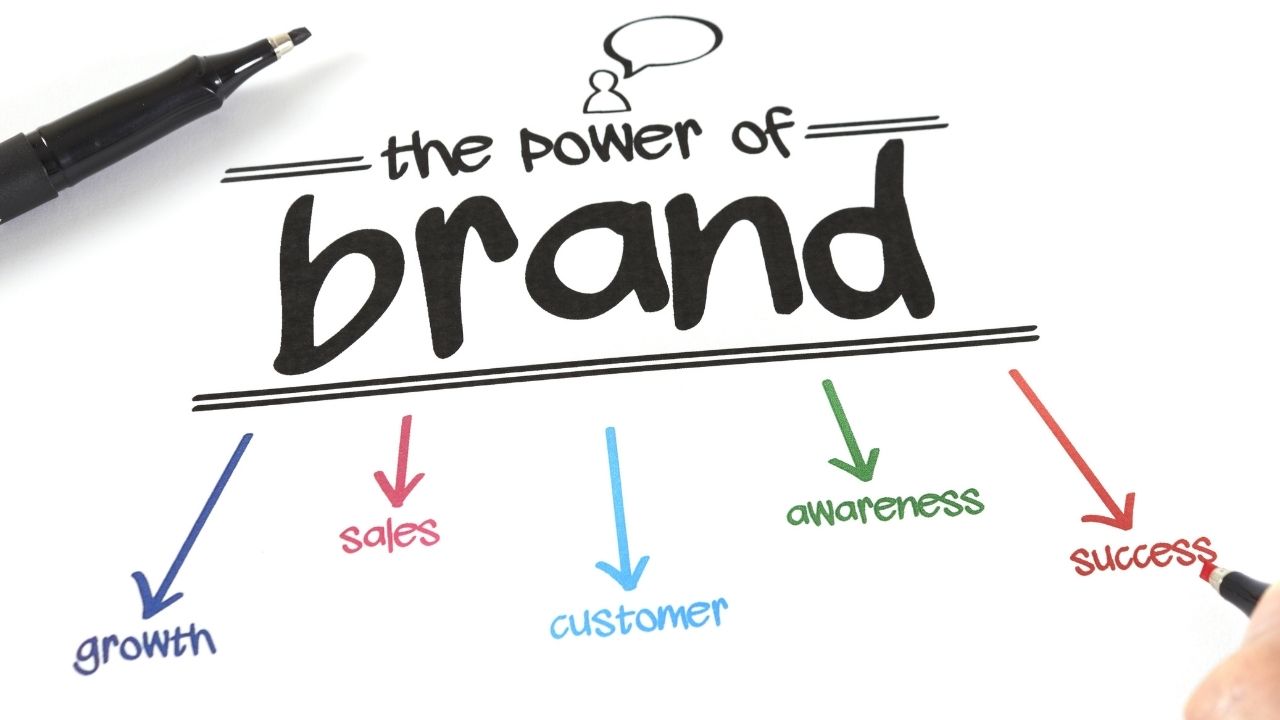
There is a particular kind of frustration that hits business owners who have been spending consistently on marketing without seeing consistent growth. The ads run. The posts go out. The emails get sent. And the results are fine sometimes good, occasionally great, but never reliable. Never compounding. Never building toward something that feels like momentum.
Most of the time, when we dig into these situations, the marketing itself is not the real problem.
The brand is, Not the logo specifically. Not the colour palette or the font choice, though those things matter. The brand in the complete sense the coherence of the impression the business leaves on every person who encounters it, across every channel, at every stage of a relationship. That brand, in most cases, is underdeveloped. It is inconsistent, generic, or simply unclear about what it stands for and who it is for.
And here is the uncomfortable reality: no amount of marketing spend reliably fixes a weak brand. You can run excellent ads for a business that does not look credible, and those ads will underperform. You can produce great content for a business that has no distinctive voice, and that content will be forgotten. Marketing amplifies what is already there. If what is already there is not compelling, marketing amplifies mediocrity.
Strong branding, by contrast, makes everything else work better. It makes your ads more effective because the creative has a clear, distinctive identity. It makes your content more memorable because there is a recognizable voice behind it. It makes your website more credible because every visual and verbal element signals professionalism and authority. It makes your referrals more powerful because existing clients can articulate clearly what you stand for.
This article is about why branding is not a creative indulgence or a luxury for businesses with budget to spare. It is a foundational business investment one that pays compounding returns over time in the form of trust, recognition, and the ability to charge what your work is actually worth.
The Branding vs. Marketing Confusion And Why It Costs Businesses Money
The most persistent source of confusion in this space is the conflation of branding and marketing. They are related, they interact constantly, but they are fundamentally different in nature and treating them as interchangeable leads to poor decisions about where to invest.
Marketing is what you do to attract attention and drive action. It is active, outbound, and campaign-based. You run an ad. You publish a post. You send a newsletter. Each of these activities has a defined start, a defined cost, and a measurable outcome. When you stop running the ad, the ad stops working.
Branding is what you build to shape perception. It is cumulative, ambient, and long-term in its compounding. Your brand is the sum of everything someone experiences when they interact with your business the visual impression, the tone of the writing, the way your team communicates, the feeling they walk away with. Unlike an ad campaign, your brand does not stop working when you stop spending. It persists in the minds of everyone who has encountered it.
The practical consequence of this distinction is significant. Marketing without strong branding is expensive in perpetuity you are constantly buying attention from an audience that has no accumulated reason to trust or prefer you. Strong branding, over time, reduces the cost of marketing because the audience that encounters your brand already has a positive prior. They recognize you. They have a sense of who you are. The marketing has less work to do because the brand has done the groundwork.
Think of branding as the infrastructure and marketing as the vehicles that run on it. A poor road makes every vehicle slower, less efficient, and more prone to problems. A well-built road lets everything move faster with less friction. Businesses that invest in marketing without investing in the brand they are marketing are essentially spending premium rates on vehicles and ignoring the road they are driving on.
What a Brand Actually Is Beyond the Logo
When most people hear “branding,” they picture a logo. Possibly a colour palette. Maybe a tagline. These are real elements of a brand, but they are the surface expression of something much deeper and confusing the surface with the substance is how brands end up looking polished but feeling empty.
A brand, in its complete form, is the answer to a set of questions that every business needs to have answered clearly:
Who are we, specifically? Not in generic terms not “we are a quality-focused team committed to excellence.” Who are you genuinely? What do you believe about how this industry should operate? What do you do differently from every credible competitor? What would be lost from the market if your business disappeared?
Who are we for? Brands that try to appeal to everyone are invisible to everyone. The most powerful brands are specifically, even provocatively, for a defined audience. They make that audience feel seen and understood, and they implicitly signal to others that this is not for them. That clarity is not a limitation. It is a competitive advantage.
What is the feeling we consistently produce? Every interaction with your brand a social media post, a phone call, a proposal document, a client invoice creates a feeling in the person receiving it. Brands that are built with intention decide what that feeling should be and engineer it deliberately across every touchpoint. Brands that are assembled ad hoc produce inconsistent feelings that accumulate into a vague, unmemorable impression.
What do we sound like? Brand voice is one of the most undervalued elements of brand identity. The way a brand writes the vocabulary it uses, the level of formality, the personality in its language, the topics it engages with is as distinctive and as identity-forming as its visual design. A brand that writes with genuine character stands out in a landscape of generic corporate language. A brand that sounds like everyone else reinforces the sense that it is interchangeable with everyone else.
What do we look like consistently? Visual identity logo, typography, colour system, photography style, graphic language functions as a recognition system. Every time someone encounters your brand and the visual experience is consistent, recognition deepens. Inconsistency in visual identity does not just look unprofessional; it actually impedes the brain’s ability to form the recognition patterns that build familiarity and trust over time.
When all of these elements are aligned the purpose, the audience, the feeling, the voice, the visual identity the brand becomes something coherent and powerful. When they are assembled piece by piece, without a unifying strategy, the brand is just a collection of design assets that happens to share a company name.
Why Trust Is the Real Currency of Modern Business
The digital economy has made trust simultaneously more important and harder to earn than it has ever been.
Easier access to global markets means more competition in every category. More competition means more noise. More noise means audiences are more sceptical and more selective. The bar for earning a prospect’s attention let alone their business has never been higher.
At the same time, the tools for building fake credibility have never been more accessible. Anyone can have a well-designed website template, a stock photo library, and a set of generic marketing claims within hours. The abundance of surface-level polish has made genuine trust signals more valuable and more scarce.
In this environment, trust is the differentiator. Not features. Not price. Not even quality, necessarily because quality is a claim every business makes and most cannot quickly prove to a stranger. Trust is what allows a prospective client to move from awareness to consideration to decision without requiring exhaustive evidence at every stage.
And trust is built, overwhelmingly, through brand. Through the cumulative impression of professionalism, consistency, authenticity, and clarity that a well-built brand delivers over every interaction. Through testimonials that feel real because they exist within a credible brand context. Through design that signals competence before a word is read. Through language that sounds human and specific rather than corporate and generic.
Cheap marketing can generate clicks. It can produce impressions. It can even drive conversions in the short term through price incentives or aggressive offers. What it cannot do what only branding can do is build the ambient trust that makes a business the default choice in its category. The business that clients recommend without being asked. The firm that wins competitive pitches despite not being the cheapest option. The brand that retains clients through economic uncertainty because the relationship is based on something deeper than price.
That kind of trust is not bought. It is built. And the building material is brand.
How Weak Branding Silently Undermines Strong Businesses
One of the most expensive dynamics in business is having a genuinely excellent product or service wrapped in branding that does not reflect its quality. The business is good. The brand does not show it. And the gap costs the business far more than most owners realize.
It suppresses pricing power. Price is not purely about what you charge it is about what the market believes you are worth. A business with a generic, inconsistent, or visually dated brand is perceived as lower-value than a business of identical quality with a polished, coherent brand identity. Premium pricing requires premium perception. Perception is the brand’s job.
It increases the cost of acquisition. When a brand does not communicate credibility clearly and quickly, potential clients require more convincing before they commit. More calls. More proposals. More follow-ups. Every stage of the sales process takes longer and requires more effort. The business pays for the brand deficit in time and lost opportunities.
It limits referral quality. Referrals are the highest-quality leads most businesses generate but referrals are only as strong as the referrer’s ability to articulate why they recommend you. When a brand has no clear positioning or distinctive identity, referrers struggle to describe what makes you different. The referral becomes “you should talk to this company, they were good” rather than “you need to talk to these people they specialize exactly in your situation and their work is unlike anything else in this space.” The second referral is dramatically more powerful.
It attracts the wrong clients. Brands signal the type of client they are for. A brand that looks budget-oriented attracts budget-conscious clients who negotiate harder, value-shop more aggressively, and are more likely to leave for a cheaper alternative. A brand that looks premium and specialized attracts clients who are selecting based on fit and expertise rather than price. The brand you project determines the clientele you attract far more than most business owners appreciate.
It demoralizes the team. This is rarely discussed but consistently observed. People who work for a brand they are proud of perform differently from people who work for a brand that feels generic or embarrassing. Brand investment is also a team investment it signals that the business takes itself seriously and expects the team to do the same.
The Psychology of Visual Trust Why Design Is a Business Decision
There is robust research across consumer psychology showing that visual design profoundly influences perceived credibility, competence, and trustworthiness often before conscious evaluation begins.
People form visual first impressions with extraordinary speed. Studies from institutions including Stanford’s Web Credibility Research Centre have demonstrated that the majority of website visitors cite design quality as the primary determinant of whether they trust a company. Not the content. Not the credentials. The visual design.
This is not a superficial finding. It reflects something fundamental about how human beings process information and make decisions. We are not primarily rational evaluators who assess information and then form feelings. We are primarily emotional and instinctive assessors who form feelings and then find information to rationalize them. Visual design speaks to the emotional and instinctive brain before analytical reasoning has engaged.
What this means practically is that the visual expression of your brand is doing persuasion work constantly either for you or against you. A logo that looks dated signals that the company is behind the times. Typography that is inconsistent signals that details are not attended to. Photography that is generic signals inauthenticity. Colour choices that clash signal poor judgment. None of these signals are delivered through language. They are delivered through the visual experience, and they are processed before most visitors read a word.
Conversely, design that is polished, intentional, and consistent signals competence, care, and professionalism at the same speed, through the same channels. A visitor who lands on a beautifully designed website arrives with a prior in favour of the business before the content has made a single claim.
This is colour psychology not in the surface sense of “blue means trust” that is an oversimplification but in the deeper sense that visual coherence and quality signal that a business attends to details, maintains standards, and produces work worth paying for. The brand design is demonstrating, not just asserting, that the business is capable of precision and quality.
The Compounding Return on Brand Investment
One of the most important characteristics of brand investment and one that makes it difficult to justify in short-term financial thinking is that its returns are not immediate and linear. They compound.
A well-built brand becomes more valuable over time. Recognition deepens with repeated exposure. Trust accumulates across multiple interactions. Reputation builds through client experiences and word of mouth. The brand that has been consistently maintained for three years occupies a fundamentally different position in its market than the brand that is three years old but has never been developed intentionally.
Compare this to advertising spend, which resets every time you stop paying. An ad budget of ten thousand pounds produces results during the period it is active and essentially zero residual value after it ends. Ten thousand pounds invested in brand strategy in positioning, visual identity, messaging frameworks, and brand guidelines produces assets that continue working across every piece of marketing, every client interaction, and every new business conversation indefinitely.
The language of investment returns is the right frame here, because that is what brand genuinely is. Early returns are modest and difficult to attribute precisely. Long-term returns are compounding and demonstrably significant. Businesses that understand this treat brand development as capital expenditure an investment in a business asset rather than as an operating expense to be minimized.
The businesses that consistently win their market over time are not always the businesses that spend the most on marketing. They are almost always the businesses with the strongest brands the most recognizable, the most coherent, the most trusted. These qualities do not appear by accident. They are the product of deliberate, sustained brand investment over time.
Brand Strategy for Businesses That Are Scaling
The relationship between brand and growth is not linear it is critical at certain stages and relatively forgiving at others.
In the earliest stage of a business, almost anything works because the founder’s personal relationships and reputation carry the weight. Clients hire the person, not the brand. This stage can persist for longer than it should, because it masks the absence of a brand strategy that would allow growth beyond the founder’s personal network.
The inflection point comes when the business tries to scale when it can no longer rely on personal relationships for new business, when it needs to hire and the team’s ability to represent the business is as important as the founder’s, when it is competing for opportunities against established firms with strong market presence.
At this point, the absence of a coherent brand strategy becomes costly. Marketing campaigns underperform because there is no strong brand to amplify. Hiring is harder because the business does not communicate a compelling identity to prospective team members. Competitive pitches are lost to less capable but better-branded competitors. The business is working harder for every win than a business with an established brand does.
This is the moment most growing businesses realize they should have invested in brand strategy earlier. And it is the moment at which investment in branding produces some of its highest returns because the infrastructure being built will support the next stage of growth rather than constraining it.
For businesses planning to scale, the question is not whether to invest in brand strategy. It is when and the honest answer is that earlier almost always produces better returns than later.
What Intentional Brand-Building Actually Involves
Brand strategy is not a logo project. It is not a brand refresh where the colours change and the font gets updated. It is a foundational exercise in clarity getting precise and honest about what the business is, what it stands for, who it serves, and how it communicates that coherently across every touchpoint.
The process typically involves several interconnected elements:
Brand positioning. Where does the business sit relative to its competitors? What does it do that others do not genuinely, specifically, demonstrably? What is the most important thing a prospective client should believe about this business before they decide to work with it?
Audience definition. Who is the brand for, precisely? Not a demographic profile a psychographic and behavioural portrait. What does this person value? What are they anxious about when they are considering a purchase like this? What do they need to see, read, or experience before they trust a new provider?
Brand messaging architecture. The language structure that expresses the brand the primary value proposition, the supporting proof points, the tone of voice, the vocabulary that is used and the vocabulary that is avoided. This is the framework that ensures every piece of content, every proposal, every website page, every email sounds like it comes from the same coherent voice.
Visual identity system. The logo and its usage rules, the colour system, the typography hierarchy, the photography and illustration style, the graphic language all defined, documented, and implemented with the consistency that builds recognition over time.
Brand guidelines. The document that brings all of these elements together and gives everyone who works with or for the brand internal team members, external agencies, freelancers, technology partners the reference they need to maintain brand consistency without constant supervision.
When these elements are in place, the brand becomes a system rather than a collection of assets. It is self-replicating and self-reinforcing. Every new piece of marketing, every new team member, every new channel maintains the coherence that builds trust because the system defines what coherence looks like.
How Xora Studio Approaches Brand Strategy
At Xora Studio, we approach branding as a business strategy exercise that produces creative outputs not as a creative exercise that occasionally considers business context. The distinction matters enormously in the quality of outcome.
Our brand engagements begin with discovery: understanding the business’s actual competitive position, its genuine strengths, its target audience’s specific psychology, and its growth ambitions. We ask questions that are uncomfortable in the best way questions that force clarity about what the business is genuinely committed to, what it will not compromise on, and what makes it worth choosing over every credible alternative.
From that foundation, we build the strategy: the positioning, the messaging, the audience definition. Then, and only then, do we translate strategy into creative expression the visual identity, the voice, the complete brand system that carries the strategy into every client interaction and marketing touchpoint.
The output is not just a set of design files. It is a complete brand infrastructure: strategy documentation, visual identity, messaging frameworks, and guidelines that the business can use to maintain brand consistency independently and indefinitely.
We also recognize that brand is not a one-time project. As businesses grow, as markets evolve, and as audiences shift, brands need to evolve with them. We build long-term relationships with the brands we develop returning to refine, extend, and strengthen the brand as the business matures.
If your business is at a growth stage where the absence of a clear brand identity is limiting your marketing effectiveness, your pricing power, or your ability to compete for the clients you actually want that is the precise problem we exist to solve.
Actionable Steps to Strengthen Your Brand Right Now
Meaningful brand investment requires professional expertise for the strategy and design work but there are steps any business can take immediately to improve brand coherence and consistency.
Audit your visual consistency. Gather examples of your business’s recent marketing: website screenshots, social posts, email headers, proposal templates, business cards. Lay them side by side. Do they look like they came from the same brand? Are the colours, fonts, and logo usage consistent? Inconsistency at this level is one of the most common and most fixable brand problems.
Reread your value proposition. The statement on your website or in your sales materials that explains what you do and why clients should choose you read it as a stranger would. Is it specific? Does it name a specific audience and a specific outcome? Does it differentiate you from your competitors, or could it describe any of them equally well? If it is generic, rewriting it is the highest-impact copy change you can make.
Define your brand voice in writing. Three to five adjectives are not sufficient. Write down how your brand sounds in practice. What words would you use? What words would you never use? Are you formal or conversational? Serious or occasionally playful? Expert-led or collaborative? Write two or three example sentences in your brand voice, then contrast them with two or three sentences in the opposite voice. The contrast reveals the definition.
Standardize your visual assets. If you do not have brand guidelines, create a simple one-page reference document that specifies your exact logo files, colour codes (hex, RGB, and CMYK), primary and secondary fonts, and basic usage rules. Share this with anyone who creates content for your business. Consistency improves immediately.
Review your photography. Images are one of the most impactful and most overlooked elements of brand visual identity. Are the images across your website and social channels consistent in style and tone? Do they reflect the quality and personality of your brand? Or are they a mix of stock images, phone photos, and professional shots that collectively produce a disjointed impression? Establishing a consistent photography style is often one of the fastest ways to elevate perceived brand quality.
Invest in the assets that last. If your budget is limited, prioritize the brand assets that will touch the most people over the longest period your website, your core logo system, your primary sales document or proposal template. These have the highest cumulative impact because they represent the brand in every serious commercial interaction.
Conclusion: Marketing Rents Attention. Branding Earns Trust.
There is nothing wrong with spending on marketing. Advertising, content, social media, paid search all of these have genuine roles to play in growing a business. But they are most effective when they are built on a brand that gives them something real to amplify.
A business that invests in brand before it invests heavily in marketing builds an asset that makes every subsequent marketing pound or dollar work harder. It attracts better clients. It commands better prices. It builds loyalty that survives competitive pressure. It generates referrals that are specific, enthusiastic, and convincing.
A business that invests in marketing without investing in brand is renting results at full price. The attention is real while the campaign runs. The moment it stops, so does the return.
The businesses in every market that feel inevitable the ones that seem to be everywhere, that prospects mention unprompted, that win pitches against cheaper competitors, that retain clients through difficult periods have almost universally made the same foundational investment. Not necessarily the largest marketing budget. Not the most aggressive growth strategy. A brand that is clear, coherent, and consistently communicated.
That brand is built on purpose. It is maintained with discipline. And over time, it becomes the most valuable commercial asset the business has.
If yours is not there yet, the best time to start building it was when the business launched. The second best time is now.
Wondering whether your brand is working as hard as it should? Xora Studio offers a free brand review for growing businesses. We will assess your current visual identity, messaging clarity, and brand consistency and show you exactly where the gaps are and what a strategically built brand could do for your business. Book Your Free Brand Review →
Q1: What is the difference between branding and marketing?
Branding is the long-term work of shaping how your business is perceived through your visual identity, your voice, your values, your positioning, and the consistent experience you deliver across every touchpoint. Marketing is the active work of attracting attention and driving action through specific campaigns, channels, and tactics. Branding builds the foundation; marketing builds on top of it. Marketing without branding produces results that reset when the campaign ends. Branding compounds over time and makes every marketing investment work more effectively. The distinction matters because it determines where budget is allocated and what return can realistically be expected.
Q2: How important is branding for a small business or Startup?
Branding is critical for small businesses and startups, often more so than for established companies. An established business has accumulated trust through years of reputation. A small business or Startup is asking people to take a risk on an unknown entity and in that context, the brand is the primary trust signal available. A professional, coherent, clearly positioned brand can bridge the credibility gap significantly. The businesses that grow quickly from a small base are almost always businesses that invested early in a brand that punches above their current scale presenting themselves with the professionalism and clarity of a market leader even before they have become one.
Q3: How does branding affect pricing and the ability to charge premium rates?
Price is inseparable from perceived value, and perceived value is largely determined by brand. A business with a strong, coherent brand that clearly communicates quality, expertise, and professionalism is perceived as worth more and can therefore charge more than a business of identical capability with a weak or generic brand. This is not manipulation. It is accurate signal transmission: a premium brand is correctly communicating that the experience of working with this business is different and better. The gap between what commodity-branded businesses can charge and what premium-branded businesses can charge in the same category is often significant and the brand investment required to cross that gap is usually a fraction of the pricing differential it unlocks.
Q4: How long does it take to build a strong brand?
A complete brand strategy and identity system — positioning, messaging, visual identity, guidelines can be developed in six to twelve weeks with a dedicated agency engagement. The brand then takes time to build equity in the market through consistent application across all touchpoints. In practice, businesses that implement their brand consistently across their marketing, their client communications, their digital presence, and their team culture begin seeing measurable improvements in lead quality and conversion rates within three to six months. Brand recognition and reputation the deeper equity that makes a brand genuinely powerful builds over one to three years of consistent expression.
Q5: What makes a brand “strong” versus weak or generic?
A strong brand has four defining characteristics. First, clarity it is immediately clear what the brand stands for, who it is for, and what makes it different. Second, consistency the visual, verbal, and experiential expression of the brand is coherent across every touchpoint without requiring constant supervision.
Third, authenticity — the brand reflects something genuinely true about the business, its values, and its capabilities, rather than projecting an aspirational image the business cannot deliver on. Fourth, distinctiveness in a landscape of competitors, this brand stands out rather than blending in. A weak or generic brand typically fails on at least two of these dimensions often clarity and distinctiveness simultaneously, which produces the common experience of a business that looks fine but is forgettable.
Q6: Should I rebrand if my business has outgrown its original brand?
Yes if the current brand is actively limiting growth rather than just looking dated. The signals that a rebrand is warranted include: the brand no longer reflects the quality or positioning of the business; the business is struggling to attract the calibre of clients it wants; the brand was built for a different target audience than the one the business now serves; the visual identity is inconsistent across different applications; or the business is entering a new market or positioning and the existing brand would create confusion.
A rebrand in these circumstances is not vanity it is removing a constraint on growth. The cost of rebranding is almost always less than the ongoing cost of a brand that is holding the business back.
Q7: Can a business build a strong brand on a limited budget?
Yes, but it requires prioritization and strategic clarity about where to invest. On a limited budget, the highest-impact brand investments are a professionally designed logo and core visual identity, a clear and well-written positioning statement and value proposition, a consistent brand voice applied across all written communications, and a single strong digital presence (typically the website) that reflects the brand accurately. These four elements, done well, produce more commercial value than a larger spread of lower-quality brand assets. The key is investing in strategy before creative execution a well-defined brand positioning makes even modest design budgets work significantly harder, because the designer is executing a clear brief rather than inventing direction from scratch. Read Out This Article For More Information.